

Now that you’ve done your research about what to expect from the interview, who the employer is, and what you bring to them, it’s time to get ready for the interview itself.
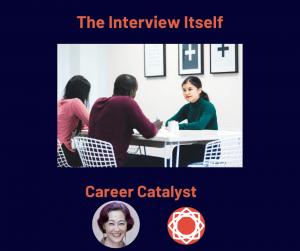
Interviews most typically follow a basic format: warming up, the serious questions, and wrapping up. Don’t dismiss any of these as unimportant, though! Each stage is essential to the process.
In the warmup, you will meet your interviewers and get asked some small-talk questions. If your interview is in person, be sure to shake hands with everyone, or to explain the cultural reasons you do not wish to do so. (Keep this simple and straightforward: “In my culture, it is considered very rude for men and women to shake hands, so please forgive me for not doing it.” It is also acceptable to explain that you are getting over an illness and don’t want to get anyone sick, but only if that’s true.) Make note of the interviewers’ names (aren’t you glad you have that notepad with you?) and smile. Even if you’re nervous, be sure to engage in the ritual small talk about the weather, the parking situation, and so forth.
The body of the interview is usually next, and is where you will get asked the serious questions. It is worth noting that you may ask for written copies of the questions in advance, though not all employers will be willing to provide them. Be sure to listen thoroughly to the questions and to answer what you are being asked, not what you want to be asked. This is not a political debate, after all, and you will not score points by avoiding questions. Whenever possible, illustrate your answers with stories that have a clear beginning, middle, and end. Sometimes these stories will come from your personal life instead of from work, and that’s fine, but do try to avoid over-sharing details of your family or social life, good or bad. Instead of mentioning your daughter’s athletic scholarship or your friend’s husband’s alcoholism, frame these as “a family member” or “an acquaintance” or something along those lines.
If you get a particularly challenging question, of if your mind simply goes blank at any point, give yourself time to think. Say something like, “That’s a good question,” take a deep breath or two, and try to relax. Sometimes the questions are strange and surprising, but changes are good that, if you think about why they are asking such an odd thing, you will come up with a reason. Contrary to what people will tell you, interviewers almost never ask questions to trip you up or for no reason at all. They are looking for something specific, and if you can figure out what, you are well on your way to answering it.
At the end of the interview, you are likely to be asked what questions you have. Please have questions prepared! Saying, “No, I don’t have anything” simply tells them that you are not actually interested. Avoid questions like salary and vacation, as well as things you could easily find out online. Instead, ask about things like the organizational culture, why they are looking to hire someone, how long each person has been with the employer, etc. Prepare more of these than you think you will need, and make note of their answers.
Afterwards, write your thank-you notes and have a little debrief. What did you answer well? What did you struggle with? This will help you next time! Just don’t judge yourself for your mistakes. Adopt a growth mindset and learn from the things you didn’t handle well.