

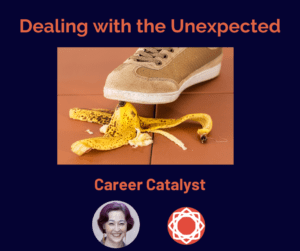
Surprises can really throw us for a loop.
I recently got a summons for a grand jury starting in the fall. To call it a curve ball would be an understatement! Autumn is a busy time of year for me, and the need to carve out every Thursday for up to 12 months caused me no small amount of alarm.
A grand jury isn’t like a regular jury. In the past, I’ve been able to call and let them know that I’m fully self-employed and can’t commit to a trial. But for this, from what I have gathered, I will at least need to report for selection, as mandated. And while I support the idea of doing my civic duty, I won’t lie: I’m dreading it.
And isn’t that just like life? We march along thinking we have a general idea of what’s coming, but, surprise! The unexpected should probably be something we learn to expect.
The first piece of advice I have, of course, is to feel your feels. Your emotions are important, even when they feel inconvenient. Trying not to have them generally doesn’t help, so sit with your feelings for a little while. So have a couple hours (maybe a day?) of really letting yourself process the new info. For heavier changes, like serious illnesses of yourself or a loved one, you’ll need to keep returning to this step. That’s normal and healthy, but try to keep yourself from wallowing in the feelings or you’ll get stuck there.
Next, assess the situation. Really assess it. In my case, serving on a grand jury would be extremely difficult and would give me a lot of hardships, but service would be weekly, so it wouldn’t entirely hamstring my business, as I initially feared. Sometimes gathering more information can be really helpful in determining what to do. If your spouse’s company is relocating you to a new place, for example, learn what you can about the new location and things will feel a little bit less mysterious.
When you’re clear about what’s involved with this change, at least as much as you can be, decide what actions you can take and what parts are out of your control. You don’t need to make firm decisions about your actions immediately, but I find it helpful to know what my options are, and to work on ways to accept the things that are beyond my ability to impact. If your best friend is engaged to that guy you really hate, for instance, you probably can’t change your friend’s mind, but you can be ready to support your friend when the fiancé proves to be a turd.
Take time to decide what you can and should do next. The ideas we come up with at moments of high emotion are often not the wisest ones, so take as much of a step back as you can before you make any concrete decisions.
Finally, I have found it helpful to have a mindfulness practice. This can be as spiritual or as un-spiritual as you want. I like the options that don’t involve chakras and divine blessings and such, but your practice should really feel like yours. You can look into EFT tapping, as well, or a movement-based practice like tai chi. There are mindfulness apps and videos galore out there, many of them free, so see what you can find that feels like a good fit for you. And give it time. You aren’t likely to feel any benefits right away, but that doesn’t mean you should give up. You’re starting a new habit of mind, so making it feel like a habit, just like any other healthy step, will take some time.
And remember that you’re strong. You’ve dealt with challenges before, so you are capable of handling this next set. You’ve got this!

